One of the best things about model railroading is that your work is never truly finished. Once you move from a model train set to a complete model train layout, you have almost unlimited opportunities to expand, change, and improve your scenery.
You can make small changes by adding a few buildings, trees, figures, or other accessories, or you can completely rebuild an existing scene. This freedom is one of the reasons model railroading remains such an engaging hobby for beginners and experienced collectors alike.
Whether you are building your first layout or looking for model train layout ideas for your next project, experimenting with themes, scenery, and seasonal details can completely change the appearance of your railroad.
Experiment With Your Model Train Layout Theme
When planning a model railroad, hobbyists often choose a specific theme based on a particular time period, geographic location, railroad, or type of scenery. A defined theme can make it easier to determine which trains, buildings, vehicles, people, and accessories belong on the layout.
But following a strict theme is not a requirement.
What happens if you want to combine different eras or create a scene that exists entirely in your imagination? You can.
For example, you could create a Wild West-style town and have a modern locomotive traveling through it. You could also combine early 20th-century passenger cars with a modern train station. While these combinations may not represent a historically accurate railroad, they can create a unique and highly personalized layout.
Try a “No Theme” Model Train Layout
If choosing one specific era or geographic location feels too restrictive, consider creating a no-theme model train layout.
A no-theme layout gives you the freedom to use the trains, buildings, scenery, and accessories you enjoy without worrying about whether every element belongs to the same historical period.
This approach can be especially fun if you already have a collection of model railroad accessories and scenery materials. Instead of purchasing everything for a specific theme, look through your existing collection and see what you can create.
You may discover that combining unexpected pieces produces one of the most interesting scenes on your layout.
For hobbyists who enjoy creativity more than historical accuracy, a no-theme layout can be an excellent way to experiment and have fun.
Build Your Layout Around a Story
Another way to make a model railroad more interesting is to think beyond individual scenery pieces and create a story.
Instead of simply placing buildings and trees around the tracks, think about what is happening in the scene.
Is a freight train delivering supplies to a small town? Are passengers waiting at the station? Is a construction crew working near the railroad? Are farmers harvesting crops beside the tracks?
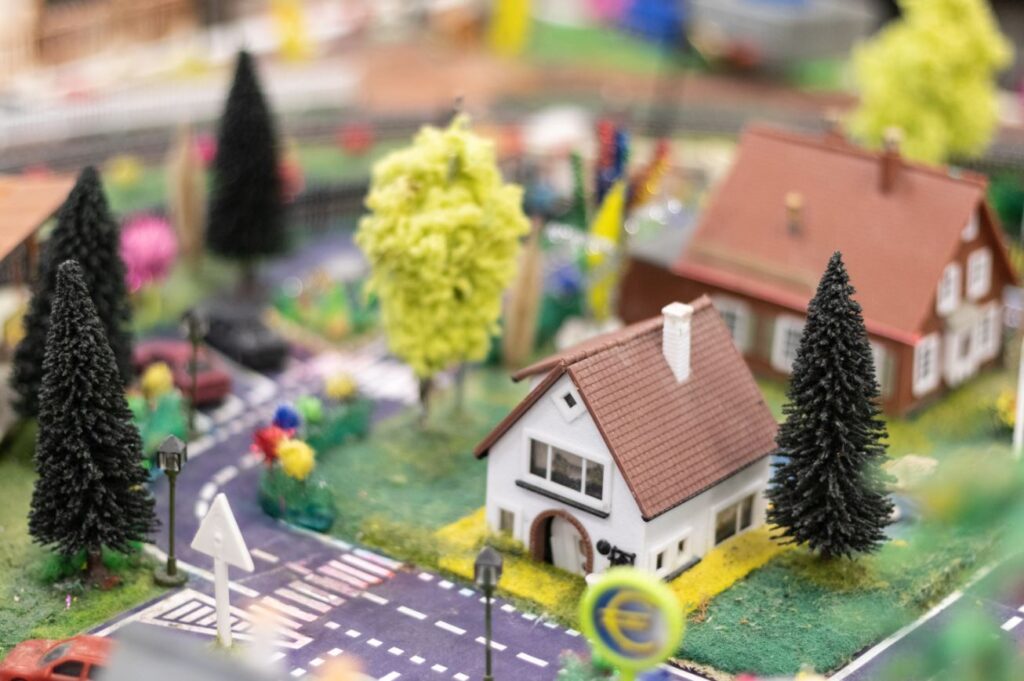
Adding figures, vehicles, signs, animals, and other small details can make your layout feel more like a miniature world rather than a collection of scenery.
These details also give viewers something to discover every time they look at your layout.
Add Seasonal Elements to Your Model Railroad
Changing the season of your model train layout is another simple way to create a completely different atmosphere.
Seasonal model railroad scenery often relies on small details, colors, textures, and accessories to establish the time of year. You do not necessarily need to rebuild your entire layout to make it feel like spring, summer, fall, or winter.
The right combination of trees, ground cover, colors, people, vehicles, and weather-related scenery can make a major difference.
Spring and Summer Model Train Layouts
Spring and summer provide plenty of opportunities for adding color and activity to a model railroad.
Consider incorporating:
- Green grass and ground cover
- Flowering trees
- Spring foliage
- Wheat and crop fields
- Farmers and farm equipment
- People enjoying outdoor activities
- Freshly landscaped yards
- Park scenes
- Green trees and shrubs
You can also create a more detailed agricultural scene by adding farmers working in fields, tractors, barns, fences, and other rural accessories.
Summer scenery can be especially effective when you want your layout to feel bright, active, and full of life.
Fall Model Train Scenery
Fall is one of the most visually interesting seasons to recreate on a model railroad. The changing colors of the trees and landscape provide an opportunity to add depth and contrast to your scenery.
You can use a combination of red, orange, yellow, brown, and green foliage to create the appearance of changing leaves.
Other fall accessories can include:
- Fallen leaves
- Hay bales
- Harvest scenes
- Corn or wheat fields
- Farm equipment
- Autumn trees
- Seasonal figures
- Fall decorations
- Rural and small-town scenery
Adding these small details can make your railroad look dramatically different without requiring a complete layout redesign.
At Charles Ro, you can find model railroad scenery and accessories to help bring seasonal layouts to life.
Create a Winter Model Train Layout
Winter scenery can completely transform a model railroad. Snow-covered buildings, trees, roads, tracks, and landscapes can create a dramatic setting for your trains.
Creating a basic winter scene does not necessarily require an extensive collection of specialized accessories. Depending on the scale and type of layout you are building, realistic-looking snow effects can be created using appropriate model railroad scenery materials.
For a more detailed winter layout, consider adding:
- Snow-covered trees
- Snow along the railroad tracks
- Winterized buildings
- Snow-covered roads
- Icicles
- Winter vehicles
- People wearing winter clothing
- Snowplows
- Frozen ponds or waterways
- Holiday decorations
The key to creating convincing winter scenery is consistency. If snow is covering the ground, consider how it would also affect buildings, trees, vehicles, roads, and railroad equipment.
Use Model Train Accessories to Add Realism
Scenery establishes the overall environment, but model train accessories are what can make a layout feel alive.
Small details such as benches, signs, streetlights, figures, vehicles, fences, telephone poles, farm equipment, and businesses can add realism and character to your scenes.
When adding accessories, avoid placing everything randomly. Think about where each item would realistically be located.
For example, a gas station should have vehicles and customers nearby. A railroad station might have passengers, benches, signs, baggage, and station employees. A farm should have appropriate equipment, fencing, crops, or livestock.
These details help create a believable miniature environment.
Do Not Be Afraid to Rebuild Your Layout
A model railroad does not have to remain the same forever.
One of the biggest advantages of the hobby is the ability to change your layout whenever you want. If you are no longer happy with a particular scene, rebuild it. If you find new scenery that inspires an idea, incorporate it. If you want to try a different season, change the landscape.
Experimentation is part of the fun.
You may even find that rebuilding an existing scene teaches you more about model railroad scenery, composition, scale, and layout design than simply leaving everything unchanged.
Find Inspiration for Your Next Model Railroad Project
Creating a specific era or geographic location can be challenging, but it can also be one of the most rewarding parts of model railroading. At the same time, there is nothing wrong with creating a layout that follows your imagination rather than historical rules.
Whether you want to build a realistic railroad, create a seasonal scene, experiment with a no-theme layout, or simply find new ways to use the accessories already in your collection, there are countless ways to make your model train layout your own.
At Charles Ro, we offer model railroad products, scenery, accessories, and other items to help hobbyists bring their layouts to life.
Explore our collection and find inspiration for your next model train layout.