The most common beginner model railroad mistakes include poor layout planning, mismatched scale and gauge, ignoring minimum radius requirements, miscalculating gradients, and building overly complex setups too soon. Avoiding these errors from the start saves time, money, and frustration.
Getting into model railroading is one of the most rewarding things a hobbyist can do. But the early stages come with a steep learning curve. At Charles Ro, we see new builders walk through our doors near Malden, MA every week, and the same handful of mistakes come up again and again. This post covers what those mistakes are, why they happen, and what you can do instead. Read on for answers to the questions we hear most.
What Layout Planning Mistakes Do Beginner Model Railroaders Make?
Skipping the planning stage is the single fastest way to derail a new build. Many beginners jump straight into purchasing track and rolling stock before they have a clear picture of the available space, the desired track configuration, or how the layout will grow over time.
Good layout planning starts with a scaled drawing of your space. Measure the room carefully. Then map out where your track will run, where structures will sit, and how you will access different parts of the layout for maintenance. Planning for access is something most beginners overlook entirely, and it becomes a real problem once scenery is in place.
A few planning habits that pay off early:
- Draw before you build. Use graph paper or free layout design software to sketch your plan at scale before buying a single piece of track. This reveals problems like dead ends and tight radius curves before they cost you money.
- Plan for maintenance access. Every part of your layout should be reachable by hand. A good rule is that your arm reach sets the maximum depth of any section without a built-in access point.
- Think in phases. Plan the full layout, but build it in stages. This keeps the project manageable and lets you adjust as your skills improve.
How Do Scale and Gauge Compatibility Issues Affect a Model Railroad Layout?
Scale and gauge are two of the most misunderstood concepts in the hobby, and mixing them up leads to real problems. Scale refers to the ratio of the model to the real thing. Gauge refers to the distance between the rails. HO scale and N scale are the two most popular options for home layouts, and each has specific gauge requirements.
The compatibility issue arises when beginners purchase locomotives, rolling stock, and track from different manufacturers without checking whether the scale and gauge match. A locomotive that runs on HO scale track will not perform correctly on N scale track, and vice versa. More subtly, some specialty track products are designed for specific gauges that do not correspond to the most common options.
Before purchasing any rolling stock or track, confirm that every product shares the same scale and gauge. At Charles Ro, our team is happy to help you verify compatibility across brands.
What Is Minimum Radius and Why Do Beginners Get It Wrong?
Minimum radius refers to the tightest curve a given locomotive or piece of rolling stock can navigate without derailing or binding. It is one of the most overlooked specifications among new builders, and ignoring it causes real operational problems.
Longer locomotives and passenger cars require larger minimum radius curves to run smoothly. A curve that works fine for a short freight car may cause a long steam locomotive to derail or stall. Manufacturers publish minimum radius requirements for their products, and those numbers should be treated as hard limits, not suggestions.
The mistake beginners make is designing their layout first and then buying equipment, only to discover that the curves they built are too tight for the locomotives they want to run. The better approach is to decide on your equipment first, note the minimum radius requirements, and then design your curves accordingly.
How Should Beginners Measure and Plan Gradients on a Model Railroad?
Gradients describe the slope of a section of track, typically expressed as a percentage. A gradient that is too steep causes locomotives to stall under load and rolling stock to roll freely when uncoupled. Getting this wrong is a common beginner frustration.
The general guidance in the hobby is to keep grades as gentle as possible. Steeper grades are manageable on short runs with light loads, but they punish longer trains and weaker locomotives quickly. The grade also needs to be consistent. Abrupt transitions between flat sections and sloped sections create binding forces on couplers and can cause derailments at the point of transition.
Use a proper gradient gauge or digital level when laying track on a slope. Do not estimate by eye. Even a small miscalculation compounds over a long run of track and creates problems that are difficult to diagnose later.
Why Should Beginners Avoid Complex Layout Designs at the Start?
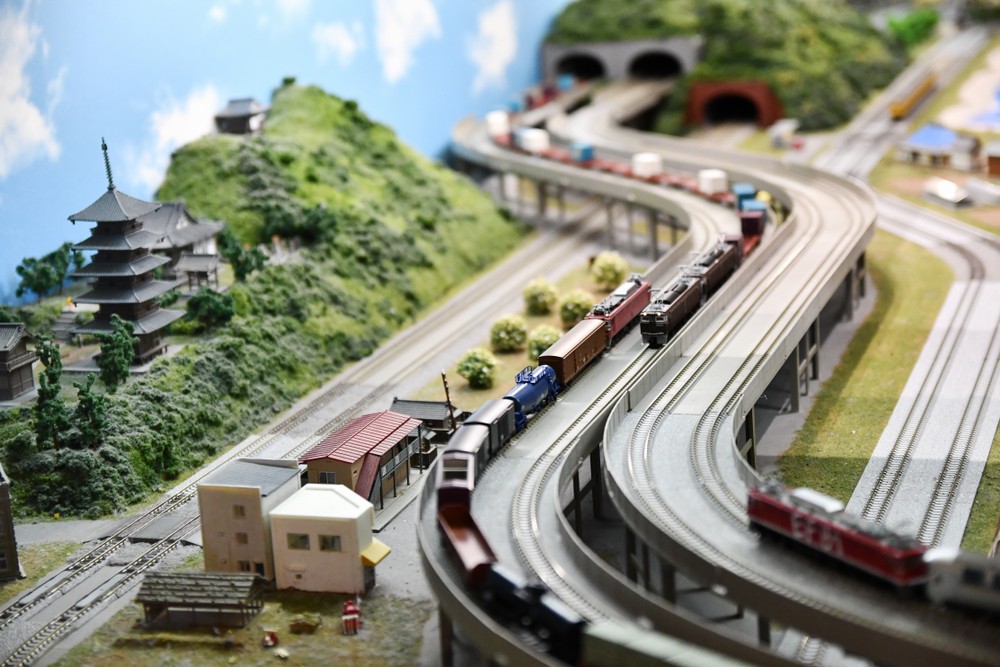
Complex layouts look great in magazines and on video platforms, but they present real challenges for builders who are still learning the fundamentals. A layout with multiple levels, extensive turnout arrangements, and detailed scenery demands skills in wiring, track planning, and benchwork that take time to develop.
The better path is to start simple. A straightforward oval or point-to-point layout teaches you everything you need to know about track laying, wiring, and operation before you commit to something more ambitious. You can always expand. A solid small layout is far more satisfying than a large one that never runs reliably.
Building a simple layout first also gives you a running railroad quickly, which keeps motivation high during the early stages of the hobby.
Start Strong with the Right Foundation
The mistakes covered here are all avoidable. Plan your space carefully. Match your scale and gauge before buying anything. Respect minimum radius requirements. Measure your gradients properly. And build a simple layout before chasing complexity.
Charles Ro carries a full selection of HO and N scale products from top manufacturers, and our team is ready to help you get started on the right foot. Browse our inventory or visit us in-store to talk through your layout plans.